The Last Sitting: Why Half Past Two Is a Bistro's Most Generous Hour
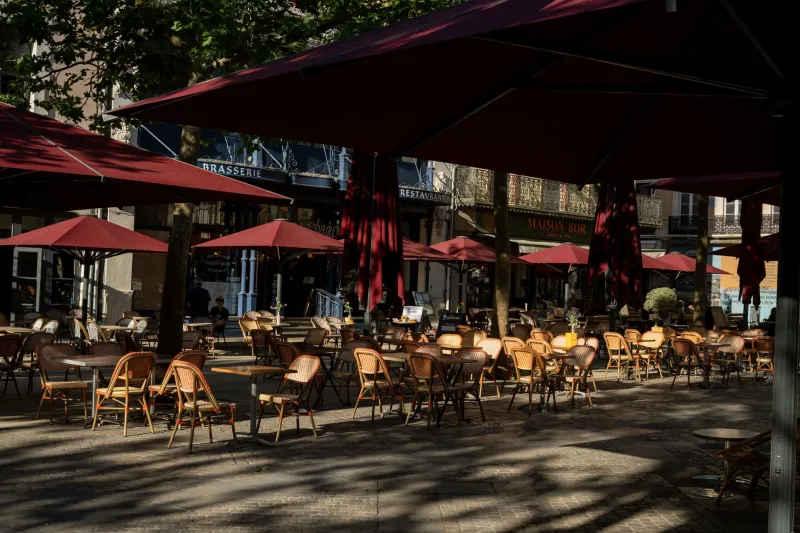
At half past two on a grey November afternoon, a bistro is a different room. The lunch rush has gone. The pavement outside has that damp, early-dark look. Inside, the coffee machine has settled into a lower register, the napkins are no longer standing to attention, and the kitchen has stopped pretending that the whole menu is still at your disposal. This is the last sitting: the final lunch of service, when the day has already begun to lean towards evening.
It is not the most fashionable hour to eat. In the UK we tend to treat lunch as a punctual affair — a sandwich at the desk, a bowl of something at one, a meeting at two. But a 2.30pm table in November has a particular charm. It is unhurried without being lazy, late without being difficult. It asks the bistro to look after you at the very moment it is thinking about its own supper, and that is precisely why it can feel so generous.
The hour after the hour
A bistro at 2.30pm is a bistro with its guard down. You may find the chef in the doorway, a waiter folding cloths, a solitary drinker at the bar who has nowhere else to be. The menu might have a few crossings-out. The specials board may have been rubbed back to its bones. None of this is a failure. It is simply the truth of a kitchen that has been cooking since morning.
The late lunch is not for every occasion. If you want the full theatre of a Friday night, book for Friday night. But if you want a table where the pace is softer and the conversation can meander, half past two is a quietly excellent choice. The room has exhaled. You can sit in it.
Why November makes room for it
November is the ideal month for this sort of lunch. The day is short enough that a late table feels like a small act of defiance, but not so deep into winter that you are eating in pitch darkness. There is still a thin grey light at the window. There is still time for a walk afterwards, or a browse in a bookshop, or a slow train home.
It also suits the food. By mid-afternoon in November, the kitchen has had time to settle into its braises, its roots, its mushrooms and game, its apples and pears. A late lunch is not the moment for a delicate plate that has been waiting under a lamp. It is the moment for something that has been bubbling quietly, or for something simple and cooked to order because the chef still has the pan out.
And there is a pleasant Britishness to it: a refusal to be rushed, a willingness to let the afternoon blur into early evening. You do not need to call it supper. You can call it lunch and mean it.
What to order when the board is thinning
The first rule of the late bistro lunch is to ask. Not in a fussy way, but warmly: what is still good? What would you have? A good front-of-house will tell you. They know which dishes have held up and which have been sitting. They know whether the soup is worth it, whether the omelette is the right call, whether there is a slice of tart left.
Order within the rhythm of the room. A single course is perfectly respectable. Two is generous. A full three-course lunch at 2.35pm can feel like a small siege, especially if the kitchen is winding down. Choose things that improve with time or are made quickly: a bowl of soup with good bread, an omelette, a croque, a salad with something warm alongside it, a plate of cheese if the board still looks happy. If there is a braise left, take it. If there is a glass of red open, take that too. A half-bottle or a carafe is often the right size for a late lunch, partly because it keeps the afternoon gentle.
What you are really ordering is not just food but a bit of the kitchen's remaining attention. Be kind with it. Do not demand the tasting menu at 2.40pm. Do not sigh at the crossings-out. Ask for what is there, and enjoy the fact that it is.
The hospitality of the last table
The last table of lunch is a two-way courtesy. The bistro is still serving, but it is also beginning to close. Read the room. If the chairs are going up, you have arrived too late. If the door is open and the staff are calm, you are welcome. The difference is usually obvious.
Once you are seated, settle in without taking root. The pleasure of the late lunch is that nobody is hovering to turn your table. But nobody wants to be there at five either. Order with a little decisiveness. Drink slowly. Ask for coffee while the machine is still warm. Pay without a pantomime. Leave a decent tip if the welcome was genuine. Then step out into the November dusk and let the day close around you.
There is something lovely about being the last lunch. The room is quieter, the service more personal, the food less performed. You are not getting the scraps of the day. You are getting the bistro with its apron loosened, which is often the most honest version of all.