A Plate Before the Public: The Bistro's Quiet Staff Meal
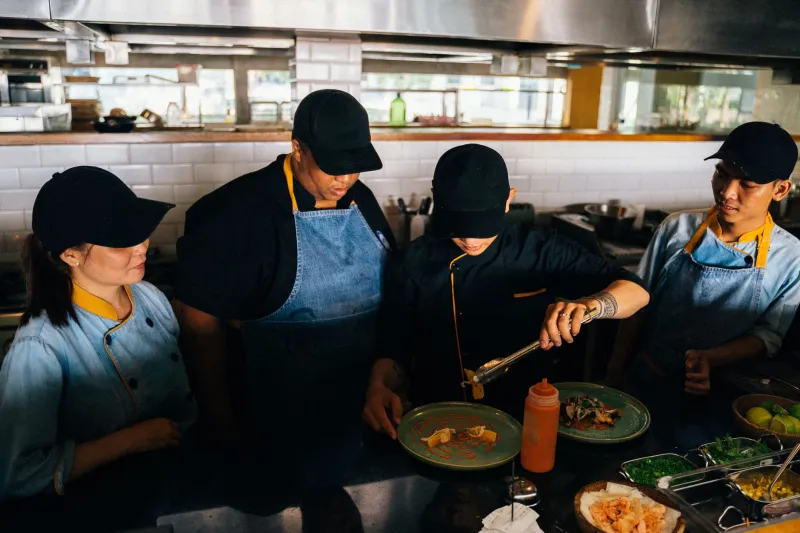
On a wet November morning, a bistro kitchen is already busy with the quiet arithmetic of lunch. Vegetables are trimmed, stock is checked, the first deliveries are unpacked and the day's board is beginning to take shape. By half past eleven, something is on the table that will never appear on that board. It might be a pot of lentils with sausages, a tray of roasted roots, or yesterday's bread turned into a gratin. This is the staff meal: the first sitting of the day, taken standing or perched on a stool, eaten before the doors open and the dining room fills with coats and chatter.
In French kitchens it is often called the family meal. The phrase is warm, but it is also practical. It answers a daily question: how do you feed a team before they feed everyone else? In a British bistro, that question comes with local accents — a pot of leeks and barley, a dish of braised chicory, a sharp apple salad beside something rich. The staff meal is not the menu, but it is rarely unrelated to it. It is where the kitchen's habits, economies and seasonal instincts gather in plain sight.
The first sitting of the day
The staff meal has no printed format and very little ceremony. It is not a tasting, and it is not a performance. It is a real meal for people who have been on their feet since early morning and will soon be on them again for hours. That is precisely why it is revealing. A kitchen that can put together a generous lunch from what is at hand is a kitchen that understands rhythm. It knows that service is a long game and that hunger makes poor hosts of anyone.
There is usually something comforting at the centre: a soup, a braise, a grain dish, a tray of roasted vegetables. Something sharp or green sits beside it when the season allows. In November, the British larder offers roots, cabbage, pulses, apples and the last of the hedgerow. A bistro with a French apron and a local pantry might turn those things into a lunch that tastes of the week rather than the recipe book. The staff meal is where the kitchen's seasonal instincts show without the polish of service. If the daily board is the bistro's public face, the staff meal is its working face.
Economy, not stinginess
Much of the staff meal is built from trim, offcuts and leftovers: mushroom stalks, chicken bones, the wrinkly tomatoes that will not make it to a salad, the end of a cheese. This is not a gimmick. Good kitchens hate waste, and the staff meal is one of the oldest ways of turning the edges of a menu into something nourishing. A chef who can make lunch from the bits and pieces is a chef who understands economy.
But there is a line between thrift and neglect. The staff meal should not feel like a bin with a tablecloth. It should be simple, yes; inexpensive, certainly; but it should still be food that someone has thought about. A team that is fed badly notices. A team that is fed well, even plainly, notices that too. In a good bistro, economy is creative rather than mean. The leftovers are not an excuse; they are the starting point.
A kitchen's real palate
The staff meal also says something about the cooking that sustains a kitchen. It is often the food cooks actually want to eat: braises, grains, big salads, toast, something with a spoon. It can be a testing ground, too. A new dressing, a cheaper cut, a pickle that needs using up — all can appear at the staff table before they ever reach the dining room. Waiters learn how dishes taste and how to talk about them. Cooks see what disappears first. The meal creates a shared vocabulary.
When cooks and front-of-house sit down together, even briefly, service begins with a common table rather than two separate teams. That matters. A bistro is not only a kitchen and a room; it is the handover between them. The staff meal is one of the small, unglamorous rituals that makes the handover feel human.
What it does for the dining room
A team that has eaten properly is less harried. That is not a romantic claim; it is a practical one. Hunger narrows attention. A cook who has not sat down since seven in the morning will feel the difference by two. A waiter who has bolted a sandwich over the bin will not be at their most generous when the third table asks about the specials. The staff meal is hospitality before hospitality. It is the bistro looking after its own.
On a busy Saturday, the effect is subtle but real: a calmer explanation of the daily board, a more patient pace at the pass, a willingness to pause. The dining room inherits the mood of the staff meal, even if no diner ever sees it. Not every bistro can offer a long break, and service does not stop for ceremony. But even twenty minutes at a shared table can change the weather of a shift.
A private menu, warmly shared
For diners, the staff meal is invisible, and perhaps it should remain so. It is not a secret menu to unlock, or a trend to request. It is simply one of the ways a restaurant stays alive behind the scenes. But it is worth knowing that behind the chalkboard there is another table, less polished and more candid. A bistro that cooks for its team as if they were guests has already understood something about hospitality. That is a reassuring thing to sense from the dining room, even if you never see the plate.