Between the Squash and the Tinsel: A November Menu That Lets Autumn Linger

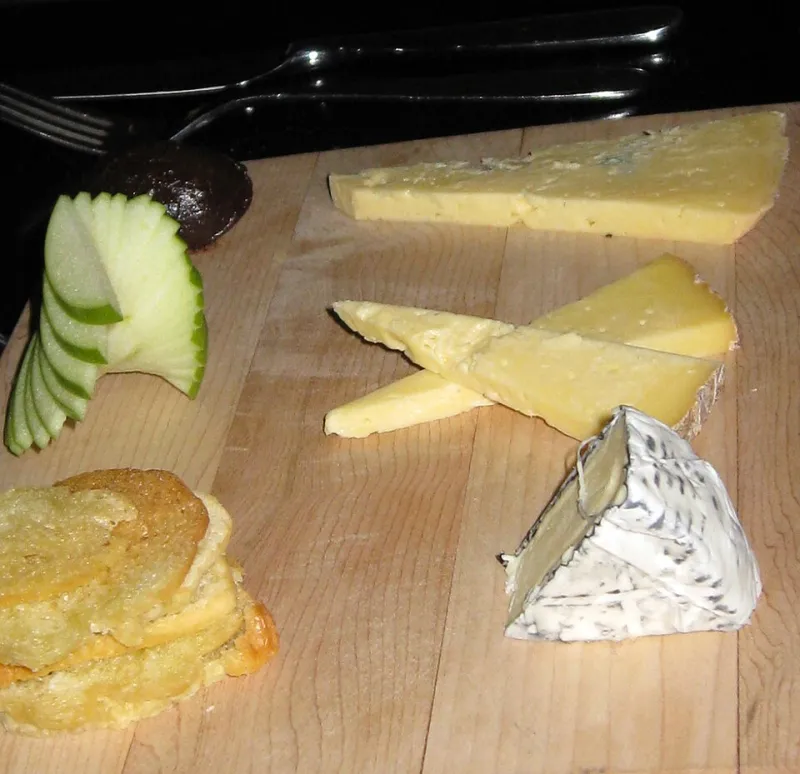
Photo: celeriac pear game greens autumn bistro table seasonal November, via happybirthdayall.com
By the second week of November, the year feels unresolved. The clocks have changed, the last leaves are coming down in wet handfuls, and every shop has already started humming with tinsel. In the kitchen, this is not winter. It is the in-between: the awkward, generous weeks when autumn still has something to say but the body starts asking for warmth. A bistro menu should listen to both.
The case for not rushing the season
There is a temptation in November to jump straight to the comforting heaviness of winter cooking. Braises, mash, root vegetables, spices, perhaps a premature mince pie. All of that has its place, but not yet. The larder is still full of things that are not winter food: celeriac with its clean, celery edge; pears that are finally worth eating; game that is in its first flush; greens that have taken on a little sweetness after the frost. To ignore them is to skip a whole chapter.
The French have a useful phrase for this sort of cooking: faire avec ce qu'on a. Make do with what you have. In a British bistro, that means looking at the week's produce and building a short menu that feels neither like a harvest festival nor a Christmas preview. November is its own season. It deserves its own plate.
What the larder is saying
Celeriac is the quiet star of the in-between. Raw, it makes a remoulade with mustard and crème fraîche that cuts through richer courses. Cooked, it turns silky in a soup or a purée, and it has enough earthiness to sit beside game without shouting. It is also cheap, which is never a bad thing in a bistro.
Pears are at their best now. Comice and Conference are both good, but do not limit them to the cheese board. A pear poached in white wine and a little honey makes a fine dessert with almonds. A firm pear, sliced thin and dressed with bitter leaves and blue cheese, makes a starter that feels autumnal without being sweet.
Game is the season's treat. Pheasant, partridge and venison are all arriving in the sort of quantities that make a bistro menu possible. Game does not need to be grand. A roast partridge with a little bacon and a dish of greens is enough. A pheasant stew with pearl barley and root vegetables is generous, inexpensive and exactly the sort of thing a November table wants.
Greens are the balance. Cavolo nero, kale, Brussels tops, spinach and the last of the chard all have a role. Cook them quickly, dress them with lemon or vinegar, and use them to stop the plate from becoming a mudbath of root vegetables. A November menu without something green is a menu that has given up too early.
A menu for the in-between
This is not a menu to follow slavishly. It is a shape: three courses that move from bright to warm without ever tipping into December.
To begin
Celeriac remoulade with pear and walnuts. Grate the celeriac finely, dress it with mustard, mayonnaise, a little lemon and plenty of black pepper. Slice a firm pear into thin matchsticks and fold it through at the last minute. Scatter with toasted walnuts. It is fresh, crunchy and quietly French.
To follow
Roast pheasant with cavolo nero and celeriac purée. Brown the pheasant in a pan, then finish it in the oven with a little butter and thyme. Rest it well. Cook the cavolo nero in salted water, then toss it in the pan with a squeeze of lemon. The purée is simple: celeriac boiled until tender, drained thoroughly, then mashed with butter and a spoonful of crème fraîche. A little game jus, made from the roasting tin with a splash of cider, ties it together.
For a vegetarian table, a mushroom and pear tart works beautifully. Puff pastry, a layer of caramelised onions, sliced mushrooms and a few slivers of pear on top. Bake until crisp and serve with a green salad.
To finish
Pear and almond tart. A frangipane base, sliced pears arranged on top, a dusting of icing sugar. Serve it warm with a spoonful of crème fraîche. It is not a Christmas pudding, and that is the point. It tastes of November: soft, nutty, a little restrained.
Kitchen notes for the in-between
Do not force the pumpkin. If you have squash in the larder, use it in a soup or a risotto, but do not make it the centrepiece just because the calendar says so. The same goes for mincemeat. There will be plenty of time for that later.
Treat pears as a savoury ingredient as well as a sweet one. They love blue cheese, walnuts, bitter leaves and a sharp vinaigrette. A few slices in a salad can do more for a November plate than a whole dish of roasted roots.
Keep the menu short. The in-between season is about flexibility. If the game looks good, use it. If the greens are better than expected, give them more room. A bistro menu should feel like it was written on the day, not carved in stone in August.
And do not be afraid of a little acidity. A squeeze of lemon, a spoonful of mustard, a splash of vinegar—these things keep autumnal food from becoming heavy. November is rich enough already. What it needs is a clean edge.
The pleasure of waiting
There is a particular pleasure in eating seasonally that has nothing to do with righteousness. It is the pleasure of anticipation. If you eat mince pies in November, they lose their shine by Christmas. If you cook game now, while it is still a novelty, it tastes like an event. The in-between weeks are not a problem to be solved. They are a small, generous window. A bistro should open it wide.