Bitter, Bright and Unbothered: The November Salad That Holds Its Own
Photo: Internet Archive Book Images, No restrictions, via Wikimedia Commons
By the second week of November, the bistro table has usually gone dark and deep. Braises, gratins, suet puddings, potatoes done three ways: all of it welcome, all of it necessary. The danger is not richness itself. The danger is richness without punctuation. A plate of something cold, bitter and sharp is not a rejection of the season. It is the comma that keeps the sentence readable.
At Gargotte, we would never argue for a summer salad in November. The tomatoes are done, the cucumbers are tired, and the idea of a bowl of leaves as a main event feels like a polite lie. But chicory is not a summer ingredient pretending to be brave. It is a cold-weather vegetable with a spine. Paired with pear, walnuts and a properly sharp vinaigrette, it earns its place beside the heaviest cooking on the menu. Add a British cheese twist and you have something that feels less like a side dish and more like a bistro statement.
Why contrast is the whole point
A good winter menu is a sequence of textures and temperatures, not a slow march through brown. A spoonful of braised beef wants the snap of something raw. A slice of onion tart wants a forkful of bitterness to cut through the sweetness. Even a Sunday roast, for all its glory, is improved by a cold, vinegary leaf alongside the potatoes and gravy.
This is not about lightness for its own sake. It is about appetite. The palate gets bored before the stomach does, and a sharp salad resets the whole table. Chicory does that better than almost anything else in the November larder. Its bitterness is clean rather than aggressive, especially when it is sliced thin and dressed at the last moment. Pear brings sweetness without perfume. Walnuts bring oil and crunch. The vinaigrette brings the necessary jolt of vinegar, mustard and salt.
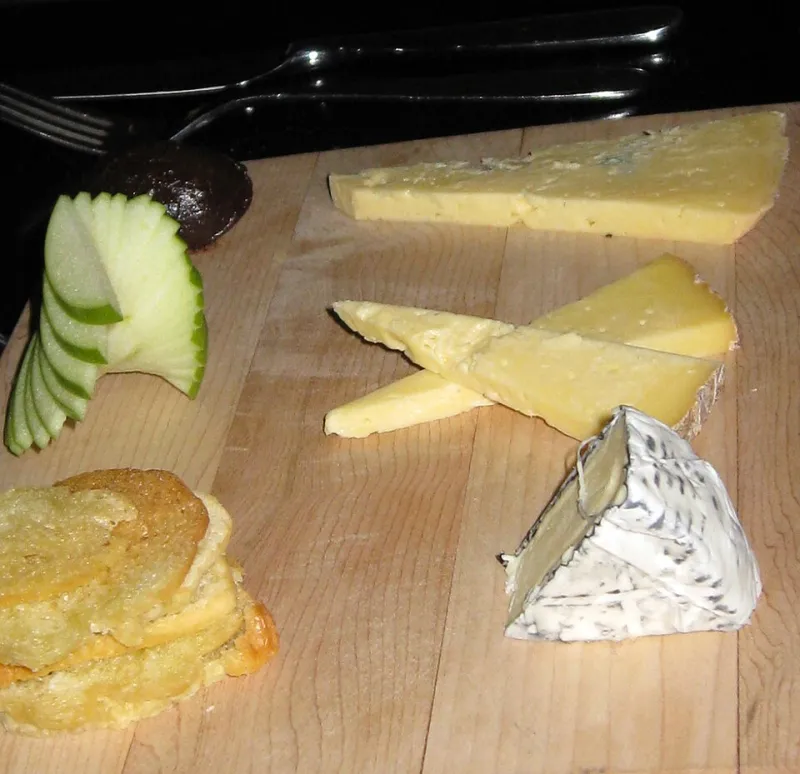
A salad like this also gives the cook somewhere to put the good cheese. Not a whole wedge, not a cheese board in miniature, just a few shards or crumbles that season the leaves as they meet them. That is the British twist: a little aged Lancashire, a crumble of Cheshire, or a modest nugget of Stilton rather than a French chèvre. It keeps the dish grounded. It tastes of here, even when the method is unapologetically bistro.
Building a cold larder that earns its place
The practical argument for a November salad is that it asks almost nothing of you at the last minute. This is the sort of thing a bistro keeps in the fridge without making a fuss: a head or two of chicory, a couple of Conference pears, a jar of walnuts, a small piece of cheese, and a jar of vinaigrette shaken together on a quiet afternoon.
That is the cold larder in miniature. It is not a display of virtue. It is a shortcut to contrast. Keep the walnuts toasted and cooled, because raw walnuts taste like the inside of a pencil. Keep the pears just ripe, not collapsing. Keep the chicory cold and dry, wrapped loosely, so the leaves stay crisp rather than limp. Keep the vinaigrette sharp enough to make you sit up: red wine vinegar, Dijon, a little shallot, salt, and a mild olive oil or a mix of olive and walnut oil. Make more than you need. It will keep for a week and improve a plate of cold ham, a baked potato, or a lunch of bread and cheese.
The cheese is the variable. A crumbly British cheese works best because it does not coat the leaves. You want little salty interruptions, not a blanket. Aged Lancashire gives a lactic tang. Cheshire gives a clean, slightly crumbly bite. Stilton gives a blue edge that turns the salad into something you could serve with a glass of something fortified. None of these need to be expensive. They need to be used with a light hand.
The assembly: chicory, pear, walnuts, vinaigrette
Slice the chicory into ribbons, but not too fine. You want some structure. If you have a little red radicchio, add a handful for colour and a slightly different bitterness. Cut the pear into thin slices or matchsticks and dress it quickly so it does not brown. Toast the walnuts, rub off any loose skins, and break them into rough pieces. Crumble or shave the cheese.
Dress the leaves just before serving. A salad like this should not sit in vinaigrette; it should be glossed with it. Toss the chicory with enough dressing to coat, add the pear and walnuts, and finish with the cheese and a little black pepper. That is all. No herbs needed, though a few picked parsley leaves would not be a crime. No croutons required, though a slice of good bread on the side is never unwelcome.
The point is the balance: bitter, sweet, salty, sharp, oily, crisp. It is a small lesson in why contrast matters. Beside a rich main course, it does the work of a good host: it notices when the table needs a change of air.
A salad is a statement, not a season
There is a lingering idea that salad belongs to summer, and that winter salads are somehow apologetic. We would put it differently. A salad in November is a confident bistro gesture. It says the kitchen understands that comfort is not the same as heaviness, and that a cold plate can be as considered as a hot one.
So keep the chicory in the fridge. Keep the vinaigrette in its jar. Put the salad on the table next to the braise, the tart, the roast. Let it do its quiet work. November is rich enough. It can take a little bitterness.